Saturday, 28 November 2009

The Endogenous Retroviruses

NEWS FLASH!

NEW! HOT OFF THE PRESS!!


“HOW DOES INSTINCT EVOLVE”

OR

Evolution's Soft Underbelly
by Asyncritus


AT LAST!

The Argument Darwin Dreaded…
The Argument No-One Has Developed Before…
The Argument to Which There Is

NO ANSWER FROM THE EVOLUTIONISTS!


35,000 viewers of my articles can’t all be wrong. Check Google for this subject and see!
http://www.thenakedscientists.com/forum/index.php?board=17.30

100 pages of amazing facts and carefully reasoned arguments. Equip yourself! Give your children the knowledge to defend belief in Creation in class!

Get your copy here. Only $19.97 as pdf.
$27 plus $5 p&p in CDR format.


CDR Version


Published by phillauren.org

THE ENDOGENOUS RETROVIRUSES


I am taking the unusual step of placing this information before readers out of sequence, because the ERVs are one of the greatest props available for evolution. Now this one is on the way out, perhaps attention will focus once more on the absence of intermediate fossils.

I acknowledge the source of this article in: The Journal of Creation Research
http://creation.com/large-scale-function-for-endogenous-retroviruses#txtRef8
Large scale function for ‘endogenous retroviruses’

by Shaun Doyle

Endogenous retroviruses (ERVs) are some of the most cited evidences for evolution. They are part of the suite of ‘junk DNA’ that supposedly comprised the vast majority of our DNA. ERVs are said to be parasitic retroviral DNA sequences that infected our genome long ago and have stayed there ever since. These short DNA strands are found throughout the human genome, and make up about 5% of the DNA,(1) or about 10% of the total amount of DNA that is classified as transposable elements (i.e. 50%).(2)

However, the term ‘endogenous retrovirus’ is a bit of a misnomer. There are numerous instances where small transposable elements thought to be endogenous retroviruses have been found to have functions, which invalidates the ‘random retrovirus insertion’ claim. For instance, studies of embryo development in mice suggest that transposable elements (of which ERVs are a subset) control embryo development. Transposable elements seem to be involved in controlling the sequence and level of gene expression during development, by moving to/from the sites of gene control.(3)

Moreover, researchers have recently identified an important function for a large proportion of the human genome that has been labelled as ERVs. They act as promoters, starting transcription at alternative starting points, which enables different RNA transcripts to be formed from the same DNA sequence.

‘We report the existence of 51,197 ERV-derived promoter sequences that initiate transcription within the human genome, including 1,743 cases where transcription is initiated from ERV sequences that are located in gene proximal promoter or 5’ untranslated regions (UTRs).’(4)

And,

‘Our analysis revealed that retroviral sequences in the human genome encode tens-of-thousands of active promoters; transcribed ERV sequences correspond to 1.16% of the human genome sequence and PET tags that capture transcripts initiated from ERVs cover 22.4% of the genome.’(5)

Moreover, researchers have recently identified an important function for a large proportion of the human genome that has been labelled as ERVs.

So we’re not just talking about a small scale phenomenon. These ERVs aid transcription in over one fifth of the human genome! ‘These data illustrate the potential of retroviral sequences to regulate human transcription on a large scale consistent with a substantial effect of ERVs on the function and evolution of the human genome.’(3) This again debunks the idea that 98% of the human genome is junk, and it makes the inserted evolutionary spin look like a tacked-on nod to the evolutionary establishment. These results support the conclusions of the ENCODE project, which found that at least 93% of DNA was transcribed into RNA.

Evolutionists have used shared mistakes in ‘junk DNA’ as ‘proof’ that humans and chimps have a common ancestor. However, if the similar sequences are functional, which they are progressively proving to be, their argument evaporates.

It seems that evolutionist Dr John Mattick, director of the Institute for Molecular Bioscience at the University of Queensland, Brisbane, Australia, was spot on in his assessment of the gravity of the ‘junk DNA’ error:

‘The failure to recognize the full implications of this—particularly the possibility that the intervening noncoding sequences may be transmitting parallel information … may well go down as one of the biggest mistakes in the history of molecular biology.’(6)

Both biblical creationists(7) and ID proponents (8) predicted that transposable elements, such as ‘endogenous retroviruses’, would have a function. In 2000, creationist molecular biologist Linda Walkup proposed that God could have created transposable elements to facilitate variation (adaptation) within biblical kinds.(7)

If the ‘junk DNA’ is not junk, then it puts a big spanner in the work of molecular taxonomists, who assumed that ‘junk DNA’ was free to mutate at random, unconstrained by the requirements of functionality. As Williams points out:

‘The molecular taxonomists, who have been drawing up evolutionary histories (“phylogenies”) for nearly every kind of life, are going to have to undo all their years of “junk DNA”-based historical reconstructions and wait for the full implications to emerge before they try again.’(9)

References

1. Conley, A.B., Piriyapongsa, J. and Jordan, I.K., Retroviral promoters in the human genome, Bioinformatics 24(14):1563–1567, 2008. Return to text.
2. Thornburg, B.G., Gotea V. and Makałowski W., Transposable elements as a significant source of transcription regulating signals, Gene 365:104–110, 2006. Return to text.
3. Batten, D., No joy for junkies, Journal of Creation (TJ) 19(1):3, 2006; . Return to text.
4. Conley et al., ref 1, p. 1563. Return to text.
5. Conley et al., ref 1, p. 1566. Return to text.
6. Mattick, J., cited in: Gibbs, W.W., The unseen genome: gems among the junk, Scientific American 289(5):26–33, November 2003; pp. 29–30. Return to text.
7. Walkup, L., ‘Junk’ DNA: evolutionary discards or God’s tools?, Journal of Creation (Technical Journal) 14(2):18–30, 2000; . Return to text.
8. Luskin, C., ‘Large Scale’ function for endogenous retroviruses: Intelligent Design prediction fulfilled while another Darwinist argument bites the dust, Discovery Institute, 21 August 2008, , accessed 12 September 2008. Return to text.
9. Williams, A., Astonishing DNA complexity demolishes neo-Darwinism, Journal of Creation 21(3):111–118, 2007; p. 113.

Instincts of the Honey Bee (Part 2)


It's time to resume our evolution bashing endeavours, using the little bee as a diabolically powerful instrument.

First, let's look at the mathematical abilities of the bee.

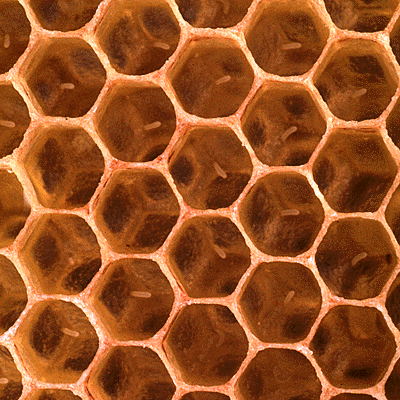
"The two most efficient packing arrangements are the hexagonal closest-packed structure (hcp) and the cubic closest-packed structure (ccp). This exercise focuses on the hexagonal closest-packed structure, and the next exercise deals with the cubic closest-packed structure."

"In the hexagonal closest-packed structure, a = b = 2r and c = 4(2/3)1/2 r, where r is the atomic radius of the atom. The sides of the unit cell are perpendicular to the base, thus α = β = 90o. The base has a diamond (hexagonal) shape corresponding with γ = 120o."

That is too difficult for me to derive, and I would not have guessed that the hexagonal structure is the most efficient for a storage structure. But it is - and can you imagine the ancestors of the bees sitting somewhere with pencils and paper at the ready, figuring out which shape to use?

No? But it MUST have happened sometime.

To even suggest that a bee, with brain the size of a pinhead, could figure out any such thing is the height of stupidity. To suggest that it took millions of years of evolution to produce such a thing is absurd. The bees would have died out long, long before they ever managed the calculations.

But let's hypothesise that one did figure it out. The next question is devastating. HOW DID THIS ABILITY GET INTO THE GENOME? The instincts possessed by all honeybees are transmitted from generation to generation - presumably in the genetic structure of the insects.

But how did it get in there? No evolutionist even dares guess - it woud expose them to too much ridicule. Here is some idiotic bleating: http://everything2.com/user/eien_meru/writeups/honeycomb

"In nature, evolution is the mother of all design. In order to produce an ounce of beeswax, bees have to collect eight times as much pollen. Collecting pollen is a very dangerous activity, as compared to hanging around the hive. So one could speculate that bees that made efficient use of their wax had more "disposable income" to deal with contingencies, and it just so happens that the honeycomb shape is very, very close to the optimal shape, in terms of unit volume per unit area."

Just so happens. Marvellous. My Mercedes just happened! And evolution is the 'mother of all DESIGN'. Get that? This totally blind process, is the mother of all DESIGN. THEY CAN'T GET AWAY FROM USING THAT WORD - IT'S SO BLINDINGLY OBVIOUS! And yet, have to kow-tow to 'science'. Here he is again:

"Mother Nature is a mathematician at heart. Really, I should say Mother Nature is an engineer, but some things are too elegant to be left to engineers."

And of course, engineers just drop out of trees. And 'too elegant' designs just happen!

"A honeycomb constructed from beeswax is nothing short of a triumph of engineering. It consists of hexagon shaped cylinders (six-sided) that fit naturally side-by-side. It has been proven by mathematicians that making the cells into hexagons is the most efficient shape. The smallest possible amount of wax is used to contain the highest volume of honey. It has also been shown to be one of the strongest possible shapes while using the least amount of material."
http://www.beeswaxco.com/howBeesMakeWax.htm

"Math teachers (and Platonist mathematicians) point to things like the honeycomb as examples of mathematics realized in nature, descended from some higher Form. But bees, as smart as they are — and they're quite intelligent — are only acting on an instinct passed down from generation to generation.

So true. Instinct. Passed down from generation to generation. But we're really inquiring about Bee No.1 - the one who figured all this out. How could it? And how did that 'instinct' evolve - and from what.

The simple answer is that it didn't. Mathematics and engineering do not come about by randomised guesswork. Genetic engineering doesn't either - but that is what the evolutionist must postulate to get this to work.

Bee A (can't make a honeycomb) -----------X----------> Bee B (can make a honeycomb.)

What happened at X?

Let's leave that for the moment and think of another little problem. Well, another dozen really.

WHY does a bee build a honeycomb? Answer, to store honey. But there are a few odd things here.

Back to Bee A (above) who can't make a honeycomb. Did it figure out that it was going to store honey in it? But, what's honey? Do you see that there is purpose involved in this?

Honeycombs without honey are just so much waste of good wax. But equally, honey without honeycombs can't really be stored. And if our evolutionist enemies start shouting that there are bees which don't store honey in combs, then we ask: how did those bees, who don't know how to make honeycombs become bees which have learnt how to do so? And we're right back to square one.

The bees plainly make combs to store their honey in. Equally, they make honey to PUT in the combs. So which came first? The honey or the comb? Evolution has no answer.

The claim is sometimes made that the bees came from wasps, but we've put that to rest in the previous article on bees.

Here's another little problem.

Honey. As you may know, bees go to flowers, slurp up the nectar (how did they ever figure out that there was such a thing? I wonder.)

Most wasps are meat eating - we gave a beautiful illustration in the article on the Eumenes wasp.

Bees eat nectar and honey. The digestion of these entirely different substances is entirely different, requiring a totally different set of digestive enzymes, a totally different stomach wall structure - because the protein digesting enzymes would destroy the walls of a non-protein digesting alimentary canal. Enzymes are tremendously complicated proteins with very, very specialised functions.

A protein digesting enzyme cannot digest sugars such as are in nectar. And a sugar digesting enzyme cannot digest proteins. And to add insult to injury, proteins cannot be made without other proteins to make them! The trap has closed on our poor evolutionist friend.

But here's another problem.

Wasps make paper to buil;d their nests. Bees make wax to build their nests. The chemical structure of these substances is entirely different. Wasps chew timber and make their paper. Bees produce wax from glands under their abdomens.

Paper is a mixture but its main constituent is indigestible cellulose, which is a complex carbohydrate with chemical formula (C6H10O5)n, where n is a very large whole number.

There is a lot more than this, obviously, but even from this (below) you can see that there is nothing simple about it.

The nature of the other lipid constituents can vary greatly with the source of the waxy material, but they include hydrocarbons, sterol esters, aliphatic aldehydes, primary and secondary alcohols, diols, ketones, β-diketones, triacylglycerols, and many more.
  • Tulloch, A.P. Beeswax: structure of the esters and their component hydroxy acids and diols. Chem. Phys. Lipids, 6, 235-265 (1971).
Further, bees produce wax from two glands under their abdomens.


That means, the substances which make the paper made by wasps, NEVER ENTERS THEIR ALIMENTARY CANALS.

That means that the sources of the wax made by bees, enters their alimentary canals, is biochemically processed, and secreted out of the wax glands.

There is nothing common to the processes in wasps and bees. They did not evolve from one another.

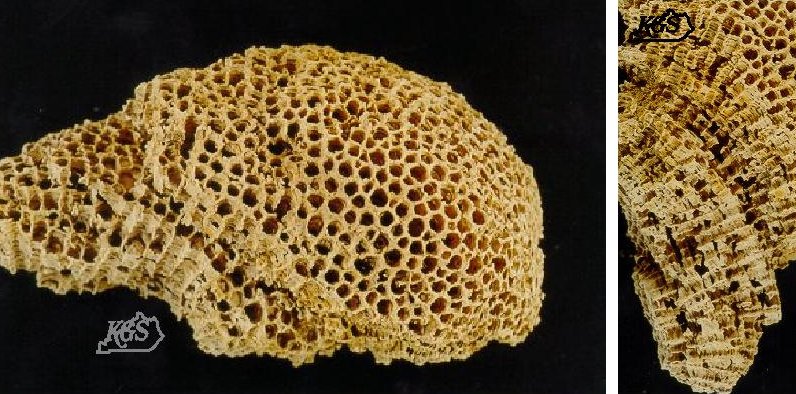
http://www.google.co.uk/imgres?imgurl=http://www.uky.edu/KGS/fossils/images/de_tab_pleuro.jpg&imgrefurl=http://www.uky.edu/KGS/fossils/tabulatemound2.htm&h=394&w=796&sz=113&tbnid=MSAvGDK0hLipNM:&tbnh=71&tbnw=143&prev=/images%3Fq%3Dfossil%2Bwasp%2Bnests%2Bpics&hl=en&usg=__tvRkbqFIsPOAhr054XqJLy6cimI=&ei=mWv8SoKFGdGx4Qawi73fAw&sa=X&oi=image_result&resnum=3&ct=image&ved=0CA0Q9QEwAg


Fossil Wasp nests


Fossil bees nest

http://www.ub.es/dpep/meganeura/ichnol06.jpg

These are pictures of the earliest fossil nests found. They don't look very different to those of today - so we can safely conclude that both bees and wasps had figured these things out right from the very beginning. Like for instance:

1The wasps knew how to make paper and the bees knew how to make wax.

2 They knew how to make honey in the case of the bees.

3 That flowers existed, which were producing nectar for the bees.

Which creates one hell of a conundrum for evolution. Flowers and bees HAD TO HAVE ARISEN AT THE SAME TIME. Otherwise, the plants could not survive, and neither could the bees.

How did that happen? Ah, says our evolutionist triumphantly, Co-evolution! As if a name makes a difference to the total absence of explanations!


On the right is a fossilised bee from 45 million years ago. It's impossible to tell the difference between this one, and a modern bee.(Similarly with the centipede on the left) Have they evolved since then? Clearly not. Did evolution get them there? Equally clearly, no.

S J Gould wrote:
The extreme rarity of transitional forms in the fossil record persists as the trade secret of paleontology . . . We fancy ourselves as the only true students of life's history, yet to preserve our favored account of evolution by natural selection we view our data as so bad that we never see the very process we profess to study. (S. J. Gould, "Evolution's Erratic Pace," Natural History, Vol. 86, No. 5, p. 14, May 1977.)

The above furnishes very clear evidence of the truth of Gould's statement.

We could go on at length about the bees, and will probably do so in subsequent articles, but next, we will look at the phenomenon of bird migration and the absolutely horrendous problems the instincts of those beautiful creatures pose for evolution.


NEW BOOK! HOT OFF THE PRESS!!


“HOW DOES INSTINCT EVOLVE”

OR

Evolution's Soft Underbelly
by Asyncritus


AT LAST!

The Argument Darwin Dreaded…
The Argument No-One Has Developed Before…
The Argument to Which There Is

NO ANSWER FROM THE EVOLUTIONISTS!


35,000 viewers of my articles can’t all be wrong. Check Google for this subject and see!
http://www.thenakedscientists.com/forum/index.php?board=17.30

100 pages of amazing facts and carefully reasoned arguments. Equip yourself! Give your children the knowledge to defend belief in Creation in class!

Get your copy here. Only $19.97 as pdf.
$27 plus $5 p&p in CDR format.


CDR Version


Published by phillauren.org

Instincts of the Honey Bee


Because honey is such an important substance in human nutrition (we’ll go into this in some detail later on), and bees have been cultivated for so many centuries because of that honey, there exists a considerable body of knowledge about their behaviour. It is quite impossible to do full justice to them in this short article.


That knowledge has accumulated from the experience of apiculturists, and from very many scientific experiments. The following account is drawn from several major authorities on bees.


Instincts


In this account, you will see just how remarkable a thing instinct is. At every step of this fascinating way, you need to ask the question:


How did an insect, with a brain not too much bigger than a pinhead, ever figure out how to do this? Darwin’s answer would probably be ‘by little steps’. The modern evolutionist’s answer will be : Oh, these branched off from their ancestors 285 million years ago. Our computer programs tell us..


http://bss.sfsu.edu/holzman/courses/Fall01%20projects/sbeefig6.jpg


There, isn’t that marvellous? Looking at that diagram, you would be less than human if you failed to be impressed with the certainty it exhibits. The combination of large names, and the apparent exactness of the diagram, create a powerful impression of correctness.


Unfortunately, the facts are against the connecting lines, ESPECIALLY AT THE START OF THE DIAGRAM RIGHT AT THE TOP LEFT HAND CORNER.


THERE IS NO COMMON ANCESTOR KNOWN, as the fossil record shows very plainly.


Fossil Bees


The very first fossils of bees are identifiably bees. There is no question about this, and here is a picture of one of the first bee fossils.


Source: http://www.msnbc.msn.com/id/15418131/

It is unquestionably a bee, and there is no question about it having evolved from anything else.


Of course there are silly suggestions about ‘evolution from wasps’, but they are quite necessarily vague about it, because the wasps show no sign of having evolved from anything else either. (See the article on the Eumenes Wasp in this series on this blog).


Here is Cornell University on the point:


“The fossil record of bees is relatively poor. Alexander & Michener (1995) commented as follows: "the fossil record [of bees] is extraordinarily fragmentary and biased toward taxa that collect resin for nesting purposes, and thus occasionally are trapped in it and fossilized in amber." The vast majority of bee fossils are in amber, and virtually all are Eocene or later in age (Rasnitsyn & Michener 1991, Engel 2001b).


Among the most important fossil bees is the presumed oldest fossil bee, Cretotrigona prisca, (here’s an artist’s impression of how it looked) from New Jersey amber (Michener and Grimaldi 1988a,b; Engel 2000a).


[In the original paper, it is described as a worker bee, indicating that the social stratification of bees was already in existence].


While initially presumed to be 80 Ma in age (Michener & Grimaldi 1988a, b), it has since been estimated to be 70 Ma (Grimaldi 1999) and 65 Ma (Engel 2000a) in age. Furthermore, whether it is Cretaceous at all has been questioned by Rasnitsyn & Michener (1991). If this fossil is indeed from the late Cretaceous, it suggests that, far from being in their earliest stages of evolution, the bees had already undergone significant diversification by the end of the Cretaceous.


Overall, considering the bee and spheciform fossil record one is forced to the conclusion that the fossils currently available significantly underestimate the age of both these groups.”


The wasps, from the Lower Cretaceous, are also easily identifiable as wasps, and it is a useful exercise to look at this link, where you will see that every specimen, is as exactly and easily identifiable as those of today. http://www.fossilmuseum.net/Fossil_Galleries/Insect_Galleries_by_Order/Hymenoptera/hymenoptera_fossil_gallery.htm


So it is curious to hear the suggestion that bees evolved from wasps.


The differences are enormous:

1 Wasps do not make honey, bees do.

2 Wasps do not collect pollen and nectar. Bees do.

3 Wasps make nests out of paper. Bees make nests out of wax. The two chemicals are entirely distinct, require entirely different biochemical processes in their manufacture, and have nothing in common.

The wasp chews timber into a pulp and makes the paper that way. Bees have special glands under their abdomen which produce the wax.


4 Wasps chew food. Bees lap nectar


5 Wasps can sting more than once. Bees can only sting once and then die.


6 Wasps don't store food in their nests. Bees do


7 Wasps don't swarm. Bees do.


Bees' Wings

If you look at the fossil of the bee (above) you will note that it has wings. If you look here again http://www.fossilmuseum.net/Fossil_Galleries/Insect_Galleries_by_Order/Hymenoptera/hymenoptera_fossil_gallery.htm


you will notice that the wasps also had wings.


Now these are among the VERY EARLIEST BEES AND WASPS found. And that presents evolutionists with some dire problems.


Assuming they could fly (which seems reasonable, given their wings, similar as they are to today’s bees) then:


Flying is a tremendous skill to have, once you’ve got it. But how does a bee, with a brain, as we have said, about as big as a pinhead,

a. get its wings (remember, there are two pairs!) and


b. learn how to use them? and


c. figure out how to get that information into its genome?


There are no sensible answers to those questions. The physical equipment is difficult enough to account for in evolutionary terms, but the skills and the instincts? And getting the information into the genome?


Evolution cannot account for the origin of these very basic questions, and therefore fails, and should be rejected as a theory of origins.


"EARN $1,000 to $3,500 EVERY WEEK!

from home, Part time, on internet. Quickly go to www.phillauren.org for full lessons."


NEW! HOT OFF THE PRESS!!


“HOW DOES INSTINCT EVOLVE”

OR

Evolution's Soft Underbelly
by Asyncritus


AT LAST!

The Argument Darwin Dreaded…
The Argument No-One Has Developed Before…
The Argument to Which There Is

NO ANSWER FROM THE EVOLUTIONISTS!


35,000 viewers of my articles can’t all be wrong. Check Google for this subject and see!
http://www.thenakedscientists.com/forum/index.php?board=17.30

100 pages of amazing facts and carefully reasoned arguments. Equip yourself! Give your children the knowledge to defend belief in Creation in class!

Get your copy here. Only $19.97 as pdf.
$27 plus $5 p&p in CDR format.


CDR Version


Published by phillauren.org

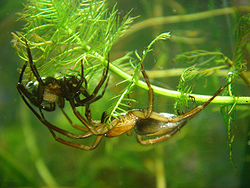
The Bell Spider

Male and female spiders from wiki


THE BELL SPIDER (Argyroneta sp)


Here is a pretty conundrum for the evolutionists.


Spiders areALL land animals. This spider is the ONLY spider to live underwater. How did it learn how to do so? http://www.spiderzrule.com/spider1.htm


The spider, an arachnid, builds a platform between the stalks of underwater plants. It attaches the platform to the stalks by silk threads, and then produces long threads which float in the water, apparently to guide the animal back to its nest. Clever, that. The threads also warn it of the approach of prey.


What now?


The hairs on the spider’s abdomen are specially designed to trap air bubbles. So it goes to the surface, air gets trapped in the hairs, and it submerges again, goes to the nest, and ‘scrapes’ the bubbles off the hairs. The bubbles are trapped by the platform, and forced up by the negative buoyancy of the air trapped in it, and forms a bell shape.


GO here for pictures of this process;

http://www.environmentalgraffiti.com/featured/incredible-aqualung-diving-bell-spider/13855


The spider lives in the bubble and waits in there for its prey to go past.


This extraordinary behaviour, in this the ONLY species to exhibit this behaviour pattern, is nothing short of a death-blow to ANY evolutionary explanations of its origin.


There is no way that this creature, with a brain the size of a pinhead, if that, could have worked out


1 How to make its silk


2 How to construct its underwater platform


3 How to trap air in its hairs


4 How to scrape it off underwater


5 That its prey would come swimming or floating by


6 How to catch it underwater


And why should it have gone underwater in the first place?


The female lays its eggs in the bell, and the juveniles trap some air from the bubbles, dart up to the surface, collect more, and set off to establish their new homes. How did they learn to do this? Instinct, you see!


Evolutionists are renowned for their fertile imaginations, but it is, as I say, impossible even to imagine a way for this to happen.


The theory has been falsified again: it cannot explain ANOTHER observation.


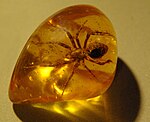
The evolution of spiders is yet ANOTHER example of evolutionary hopelessness. The very earliest fossils show no difference to today's.spiders.


Here is the wikipedia article on the subject, and you will see the pictures and comments there to this exact effect.


http://upload.wikimedia.org/wikipedia/commons/thumb/c/c8/Spider_in_amber_%281%29.jpg/150px-Spider_in_amber_%281%29.jpg

Wiki;

In addition to preserving spiders' anatomy in very fine detail, pieces of amber show spiders mating, killing prey, producing silk and possibly caring for their young. In a few cases amber has preserved spiders' egg sacs and webs, occasionally with prey attached; the oldest fossil web found so far is 100 million years old.
You note, they knew how to spin silk, make webs, catch insects and feed. They knew how to lay eggs, how to mate.

Every one of those items represents a full grown, perfectly developed INSTINCT, implanted in these little creatures in a state of perfection and completeness. they did not evolve, they could not evolve, and they have not evolved.

So, no change, no evolution, no origin. The first discovered spiders are exactly like their descendants.

We will return to the topic of spiders later, because they also present evolution with absolutely HUGE problems - like everything else in the living world.

Just as a dying tree begins to wither at the very tips, the smallest parts of the plant, just so these apparently insignificant items are really major indicators that the theory of evolution is really dead.


NEW! HOT OFF THE PRESS!!


“HOW DOES INSTINCT EVOLVE”

OR

Evolution's Soft Underbelly
by Asyncritus


AT LAST!

The Argument Darwin Dreaded…
The Argument No-One Has Developed Before…
The Argument to Which There Is

NO ANSWER FROM THE EVOLUTIONISTS!


35,000 viewers of my articles can’t all be wrong. Check Google for this subject and see!
http://www.thenakedscientists.com/forum/index.php?board=17.30

100 pages of amazing facts and carefully reasoned arguments. Equip yourself! Give your children the knowledge to defend belief in Creation in class!

Get your copy here. Only $19.97 as pdf.
$27 plus $5 p&p in CDR format.


CDR Version


Published by phillauren.org

The Miracle of the Bat

THE MIRACLE OF THE BAT ttp://tolweb.org/Chiroptera

Excellent article, pretty comprehensive: http://www.acoustics.hut.fi/u/mairas/pubs/echolocation_in_bats.pdf
Echo-location and flying Mammals

Introduction

We’ve all seen bats flitting about in the night sky, or pouring in massive swarms out of a cave. Two remarkable things are:

1 They miss one another
2 They feed on insects which they can a. detect and b. intercept and c. catch.

But let’s say a few words about this incredible phenomenon.

How do they do it?

‘This sonar [of the bat] is a marvellous discriminator: in a bat–swarm, in cave or night air, a bat can know its own sound among thousands of mobile neighbours, detecting its own signals even if they are 2000 times fainter than background noises. It can “see” prey, such as a fruitfly, up to 100 feet away by echo location and catch four or five in a second. And this whole auditory system weighs a fraction of a gram! Ounce for ounce, watt for watt, it is millions of times more efficient and more sensitive than the radars and sonars contrived by man.”

That excellent description clearly shows the standard features of Design

1 Complexity: the structure of the echo-locating system is miniaturised to fit inside the small skull of a bat, whose brain probably weighs only a few grams (about 15g in many cases). Flight is another complex achievement. NO OTHER MAMMALS CAN FLY.

2 Specificity: the echolocating device is amazingly good at locating insects, obstacles and doubtless predators. The flight mechanism is specifically functional.

3 Information: Highly advanced information is employed as the following shows.

Evolution of the Bat

There is none evidenced.

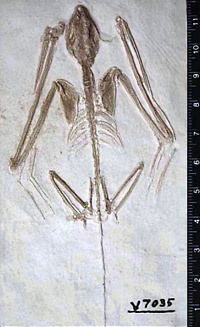
The skeleton of the Eocene bat, 54 million years ago, shows no important differences to those of today’s bats. But remarkably, they show that development which indicates that the sonar apparatus was already in existence.

"Unfortunately, the fossils available only complicate matters. They do not represent transitional morphology between quadrupedal (four-footed) animals and flying bats, and they represent animals nearly as specialized as their modern relatives"
Thewissen, J. G. M., and S. K. Babcock (1992). The Origin of Flight in Bats, BioScience, May, v. 42 n. 5, pp. 340-345.

John Hill says almost the same thing:

"...all fossil bats, even the oldest, are clearly fully-developed bats and so they shed little light on the transition from their terrestrial ancestor"
Hill, John E., and James D. Smith (1984). Bats: A Natural History, University of Texas Press, Austin.

Complexity, specificity and excellence

“We now know that bats have a method of doing synthetic aperture sonar while flying that not only determines the distance and direction of all the objects in a scene, but also reconstructs one specific object's shape. What's really incredible is that they can do both simultaneously."

I might add, at quite some speed too.

"ONR [The Office of Naval Research] would like to get naval sonars, both in listening and in processing the return information, a bit more, well, bat-like," notes ONR's Harold Hawkins.

"We would like to emulate this capability for the quick, accurate detection and classification of buried mines," said Harold Hawkins, a program manager with the biosonar program at the Office of Naval Research in Arlington, Virginia.

Excellence

In experiments, bats separately perceived and processed overlapping echo delays arriving as little as two microseconds - two millionths of a second - apart, an ability roughly three times keener than scientists had believed was possible in the mammals.

This fine-tuned capability, based in the bat's nervous system, allowed the animals to resolve echo-reflecting points on an object as close together as three-tenths of a millimeter, about the width of a pen line on paper. Such image resolution is significantly better than any man-made sonar, say the study authors.

"Using the same sounds as the bat, the best man-made sonar equipment can only process echo delays arriving five to 10 microseconds apart," said study leader James Simmons, professor of neuroscience in the Brown University School of Medicine. "The experiments showed that a bat's sonar resolved echoes that arrived two microseconds apart as easily and routinely as if there were 10 microseconds between them."

Use of Advanced Information

Knowledge of the laws governing sound travelling in air are clearly in evidence here. A bat emits a sound, which hits an object and is bounced back to the originator.

An article published in the Proceedings of the Royal Society on bat echolocation states:

Theory developed from acoustics and sonar engineering permits a strong predictive basis for understanding echolocation performance. Call features, such as frequency, bandwidth, duration and pulse interval are all related to ecological niche.'
http://www.journals.royalsoc.ac.uk/content/c7555003jn246l27/

We note firstly, that the bat knows that the sound IS going to be bounced back.

Secondly, the bat therefore has receptors which can receive the returning signals.

Thirdly, the bat has an onboard computer which calculates instantaneously how far away the object is,

Fourthly, the bat can calculate exceedingly accurately how far it will have moved itself by the time the signal returns. It can also calculate how far its prey will have moved, and its direction of movement. It can then compute a course to intercept the insect, and does so at the rate of 4/5 insects per minute.

Fifthly, it is navigating and flying at the same time. So the onboard computer has numerous functions to carry out simultaneously and additionally, including respiration, heartbeat, and other standard physiological duties.

Such calculations rival those in warplanes today, and just as those warplanes exhibit design, so does the bat. The bat, however can reproduce itself, and in this respect far supersedes any man-made contrivance.

The quotations below are further impressive technical features of bats' echo-location apparatus..

'Quantitative measures were obtained from the vocal signals produced by echolocating bats (Eptesicus fuscus) that were trained to perform in two distinct perceptual tasks, echo delay and Doppler-shift discriminations. (!!!!!)

[One wonders how a bat ever found out about Doppler shifts, and then figured out how to use it, and then constructed the apparatus to use the information, and then fit all that into the genome, and into the walnut-sized brain that it has!]

In both perceptual tasks, the bats learned to discriminate electronically manipulated playback signals of their own echolocation sounds, which simulated echoes from sonar targets. Both tasks utilized a single-channel electronic target simulator and tested the bat's in a two-alternative forced choice procedure. The results of this study demonstrate changes in the features of the FM bats' sonar sounds with echolocation task demands, lending support to the notion that this animal actively controls the echo information that guides its behavior.' ©2000 Acoustical Society of America.

'We used high speed stereo infra-red videography to study the three dimensional flight paths of the big brown bat, Eptesicus fuscus, as it chased erratically moving insects in a dark laboratory flight room. We quantified the bat's complex pursuit trajectories using a simple delay differential equation.

Our analysis of the pursuit trajectories suggests that bats use a constant absolute target direction strategy during pursuit. We show mathematically that, unlike CB [constant bearing], this approach minimizes the time it takes for a pursuer to intercept an unpredictably moving target.

Interestingly, the bat's behavior is similar to the interception strategy implemented in some guided missiles.'


http://biology.plosjournals.org/perlserv/?request=get-document&doi=10.1371/journal.pbio.0040108&ct=1

Further comments on Bat evolution

The bat is a warm-blooded animal, bearing fur, and suckling its young on milk,[i]and flying[/i].

So in order to ‘explain’ their evolution, we have to suppose innumerable small steps, where we see the bat’s supposed ancestors busy climbing trees or rock faces, leaping from the tops, holding their fingers wide apart in the effort to fly while their superb echo-locating apparatus warns them of the swiftly and fatally approaching ground below. It’s no wonder there are so many fossils. They all broke their necks jumping off trees trying to fly.

I said ‘fingers’ – because a bat’s wing is supported between digits, unlike other winged animals. If you look at the skeleton of a pterodactyl, you will see the difference plainly – but the pterodactyl was a reptile. I repeat the impossibility: a bat is a flying mammal.

Such acoustic and aerodynamic engineering capability is far beyond the capacity of chance to generate.

So to summarise, Complexity, Specificity and use of very Advanced Information in the construction of a bat, conclusively show that it cannot have been produced by chance, but by A Designer.

Instinct

We again note that instinct plays an enormous part in every aspect of the bat's natural history.

1 First, getting wings is an impossibility by any known evolutionary method.

2 Second, allowing that a pre-bat somehow DID evolve wings, then what would it do with them, since it didn't have a clue what they were about.

In fact, the bat would be at a very severe disadvantage - because IT HAD COMPLETELY LOST THE USE OF ITS FINGERS which had turned into wings.

3 But that's not all that was new. Suddenly, it had this sonar thing in its head. What to do with it, one wonders. Put an untrained ground crewman in the cockpit of a fighter aircraft which is equipped with the best echolocation apparatus ever invented, and send him out to shoot fast-flying hostiles.

He wouldn't get into the air, in the first place, and in the second wouldn't know how to use his fantastic new equipment.

Given a brain the size of a walnut or smaller in the microchiropteran bats, and given no training in flight or in the use of this unbelievably complex new equipment, I suggest that the new bat wouldn't last long.

The best equipment is useless without the instincts that power its use, and the best instincts are useless without the equipment to use.

BOTH HAD TO APPEAR AT THE SAME TIME - instantaneously, and perfectly functioning - there is absolutely NO WAY that 'gradual evolution' could have occurred.

But immensely advanced technology doesn't just happen. It is created by highly intelligent designers, with major amounts of equipment and materials at their disposal.

So how comes it that a bat 'developed', 'evolved' these fantastic designs which fill aeronautical engineers, acoustical engineers, and the military with such awe that they are even now trying to copy those designs.

And remember, the hardware is one thing - the software is another entirely. Those instincts represent the software - and no-one would dare say that the Windows program happened because there was an explosion in one of Bill Gates' factories.

No, it is obvious, even to someone as blind as a bat, that it was DESIGNED.

And design requires A DESIGNER.


NEW! HOT OFF THE PRESS!!


“HOW DOES INSTINCT EVOLVE”

OR

Evolution's Soft Underbelly
by Asyncritus


AT LAST!

The Argument Darwin Dreaded…
The Argument No-One Has Developed Before…
The Argument to Which There Is

NO ANSWER FROM THE EVOLUTIONISTS!


35,000 viewers of my articles can’t all be wrong. Check Google for this subject and see!
http://www.thenakedscientists.com/forum/index.php?board=17.30

100 pages of amazing facts and carefully reasoned arguments. Equip yourself! Give your children the knowledge to defend belief in Creation in class!

Get your copy here. Only $19.97 as pdf.
$27 plus $5 p&p in CDR format.


CDR Version


Published by phillauren.org

Migration of the Green Turtle

The Migration of the Green Turtle
http://www.sciencedirect.com/science?

"Green turtles, Chelonia mydas, make lengthy, regular migrations from Brazil to their nesting grounds on Ascension Island, 1400 miles away. The navigational systems used by Chelonia are unknown [heh heh heh!]; but recent measurements of visual acuity in green turtles suggest that they cannot use stars for guidance[heh heh!]. In this paper, we evaluate the possibility that orientation is based, in part, on the detection of some chemical substance originating at Ascension Island."

[What nonsense! Some chemical from Ascension Island, being identified by green turtles, at a distance of 1,400 miles! Must be a pretty powerful pong! And sufficiently powerful to guide a green turtle over a distance of ONE THOUSAND FOUR HUNDRED MILES, in water yet!]

Here is the phenomenon of instinct in full flower.

Let's assume that there IS some chemical emitted by Ascension Island, which reaches the turtle in Brazil. Improbable, but let's assume.

That chemical must trigger some instinctive response in the turtle, which causes it to set off, on this incredibly long journey. Where did that instinct come from? How did it become implanted in the animal's genome?

Then we have the navigational problem.

Suppose you are scuba diving, could withstand any amount of soaking, and had the necessary supplies etc to swim 1,400 miles.

You dive into the water and set off. In which direction are you going to go? Where IS Ascension Island anyway? And how are you going to find it?

I submit that you would probably be dead a long time before you ever found the island, and then faced the return journey.

So how does this turtle do it? And why?

That instinct must have been implanted there, full blown, complete, and functioning. It simply could not have evolved by any method known to man.


NEW! HOT OFF THE PRESS!!


“HOW DOES INSTINCT EVOLVE”

OR

Evolution's Soft Underbelly
by Asyncritus


AT LAST!

The Argument Darwin Dreaded…
The Argument No-One Has Developed Before…
The Argument to Which There Is

NO ANSWER FROM THE EVOLUTIONISTS!


35,000 viewers of my articles can’t all be wrong. Check Google for this subject and see!
http://www.thenakedscientists.com/forum/index.php?board=17.30

100 pages of amazing facts and carefully reasoned arguments. Equip yourself! Give your children the knowledge to defend belief in Creation in class!

Get your copy here. Only $19.97 as pdf.
$27 plus $5 p&p in CDR format.


CDR Version


Published by phillauren.org

The Bats and Echolocation

There are 3 groups of flying animals in existence today: the birds, the bats and the insects. Each of these presents evolution with insuperable problems, but my especial favourite is the bat.

It’s a shame they have had such bad press with such films as Dracula etc, because these creatures possess some of the most stupendous and miraculous pieces of biological engineering on the planet. For those who are convinced that evolution did occur, this will make not the slightest difference. For those who believe otherwise, this will be another club to beat their heads with.

Remember, the title of Darwin’s book was ‘On the Origin of Species’. That was what he set out to do, and it is what he singularly failed to achieve. It is on the origin question where he and his theory have failed most lamentably.

Fossil bats

There aren’t all that many of them, that’s for sure, and that may have something to do with the fact that they are flying animals. But what IS remarkable, is that the very first fossil bat looks remarkably like the bats of today: and has the echo-location apparatus in its head.


The author says: ‘These fossils represent essentially modern-looking microchiropterans; bats had evolved all of their characteristic features and begun to diversify by this time. In fact, the oldest known complete fossil bat, the Eocene-age Icaronycteris shown at left, shows specializations of the auditory region of the skull that suggest that this bat could echolocate.’

Remember, these are one of the earliest specimens of bat fossils ever found.

Therefore, they could fly. Now a bat does not fly using feathers, it flies using the skin between its fingers. That’s the origin of the name ‘chiropteran’ – hand-wing.

Here is a diagram to show what that means. Notice the vast difference between the bird’s wing and the bat’s:

http://www.nurseminerva.co.uk/adapt/wings.htm#bat


There is absolutely NO indication of any fossil ancestor of the bat, which hopped, jumped or leapt. There is absolutely NO indication of where and how they could have obtained the power of flight. None whatsoever. This, of course, is what the creation model predicts.

They fly at speeds of about 11.14 mph. In itself that doesn’t sound like much, but when we compare that with the body length of the animal, it is quite startling. It’s 234432 times its body length (say 3 inches) per hour, as compared with a car 20 ft long which at the same speed is only traveling 36000 times its length per hour.

Evolution is helpless to explain how this could have arisen so swiftly, so unexpectedly and so perfectly. Dawkins has laughably conceded that this gives the appearance of being designed, and then goes on to propound his pathetic fantasies about how this could have evolved. Have a look in Blind Watchmaker, (starting at page 22 where you'll find this:

The Sonar and Radar pioneers didn't know it then, but all the world
now knows that bats, or rather natural selection working on bats, had
perfected the system tens of millions of years earlier, and their 'radar'
achieves feats of detection and navigation that would strike an engineer
dumb with admiration.)
Pity they didn't strike Dawkins dumb with admiration, but one can't have everything!

Flight is one thing – marvelous as it is – but the echolocation system the animal uses beggars description.

In essence, the bat emits a squeak, which like radar, bounces back to the source. Knowing the speed of the radio wave emitted we can work out very accurately how far away an object is.

That’s us. The bats do this as well, but better than we can.

Let’s say that a bat is not moving, and emits a shriek. The sound wave travels to the insect it’s interested in, hits it, and bounces back. Let’s also say the insect is still. What happens then? We know the speed of sound and can calculate the distance to the object from the time it takes for the shriek to get there and reach back to us.

But the bat doesn’t know the speed of sound. So how can it calculate the distance of the insect? Evolution does not know.

Notice 2 things:

1 It has a sound emitter, and a sound receiver, and a computer connected to the two things which is able to calculate at phenomenal speeds, and immediately communicate those results to the muscles and nervous system.

But recall that both the bat and the insect were still.

That is not the case when the bat is hunting.

The bat is flying at up to 11 mph, and the insect is dodging and on an uncertain flight path. The calculations immediately begin to defy belief. Bear in mind too, that there are other bats emitting shrieks. How does our bat keep track of, and identify its own signal?

Answer, it possesses the necessary equipment. That equipment is of extraordinary high quality, as we’ve seen from the requirements.

From a computational neuroscience perspective, bats are remarkable because of the very short timescale on which they operate. The barrage of returning sonar echoes from a bat's near-environment lasts approximately 30 milliseconds following a sonar emission with the echo from a specific target lasting, at most, a few milliseconds.

From an engineering standpoint, biosonar systems (e.g. bats and dolphins) have inspired the design of very sophisticated sonar and radar systems that can map distant surfaces and track targets with great precision. Even with powerful mathematical tools and decades of experience, however, our best systems still do not rival the perceptual capabilities of dolphins. Many bats demonstrate incredible aerial agility, flying in complete darkness through branches and caves while hunting evasive insects. These animals perform such tasks in real-time with a total power consumption (including flight) measured in Watts, not hundreds of Watts. In addition to the ability to navigate in complete darkness by echolocation, both bats and dolphins live in very social environments using echolocation in group situations without any obvious problems with interference. All of these capabilities are highly desired by current military programs developing unmanned-aerial vehicles (UAV) especially since many of the target environments are in places where Global Positioning System (GPS) signals are unavailable and obstacle locations are not mapped.

It gets extremely technical, as we might guess, but the biggest points are very obvious.

Clearly, there is extremely high order design and implementation in this system. The military want to copy the design – which means that the bats’ system is superior to any of their own.

We have high order flight engineering and acoustic engineering allied to extreme efficiency of power consumption (measured in Watts, not hundreds of watts). And meanwhile, the animal is alive, growing, breathing, excreting, responding, moving, feeding, and reproducing. So successful is the group, that they are one of the most numerous sets of animals on the planet, as far as the numbers of species is concerned. They are estimated to be about 20% of all mammalian species.

There is not even a reputable theory to account for the evolutionary origin of bats that I have been able to find. The writers content themselves with mumbling about the as yet undiscovered ancestors of bats.Too soft, they say. But they've found birds, and jellyfish, and spiders and...

The instincts involved: flight and use of this incredible sonar system are mind boggling. Imagine putting an ignoramus in the cockpit of a modern jet fighter aircraft! Because the bat has a brain the size of a brazil nut, or less.

Evolution has failed miserably here, as usual when presented with a concrete case. The animals scream ‘We are designed’ and each little creature is a small hymn of praise to its Maker.

Thomas Addison said it well: “In reason’s ear, they all rejoice, and utter forth a glorious voice….. the Hand that made us is divine”.

Well said, Thomas.

REFERENCE

http://www.sciencedaily.com/releases/1998/10/981013075520.htm

Dawkins, Richard: The Blind Watchmaker
http://uath.org/download/literature/Richard.Dawkins.The.Blind.Watchmaker.pdf

http://neuroscience.brown.edu/simmons.html


NEW! HOT OFF THE PRESS!!


“HOW DOES INSTINCT EVOLVE”

OR

Evolution's Soft Underbelly
by Asyncritus


AT LAST!

The Argument Darwin Dreaded…
The Argument No-One Has Developed Before…
The Argument to Which There Is

NO ANSWER FROM THE EVOLUTIONISTS!


35,000 viewers of my articles can’t all be wrong. Check Google for this subject and see!
http://www.thenakedscientists.com/forum/index.php?board=17.30

100 pages of amazing facts and carefully reasoned arguments. Equip yourself! Give your children the knowledge to defend belief in Creation in class!

Get your copy here. Only $19.97 as pdf.
$27 plus $5 p&p in CDR format.


CDR Version


Published by phillauren.org